When a child can comfortably read a book but struggles to see the classroom board, road signs, or distant objects, myopia may be responsible. Also called short-sightedness or nearsightedness, myopia causes distant objects to appear blurred while closer objects are usually clearer.
The condition commonly begins during school-age years and may progress as a child grows. For families in Chandigarh, recognizing changes in distance vision early can help ensure that children receive appropriate vision correction and follow-up.
What Does Myopia Look Like in Everyday Life?
Children do not always tell parents that their vision has become blurry. If the change occurs gradually, they may assume everyone sees the same way.
Common clues include:
- Sitting unusually close to the television
- Moving closer to the classroom board
- Squinting to see distant objects
- Holding digital screens very close
- Difficulty recognizing people from a distance
- Complaints of eye strain or headaches
- A noticeable decline in classroom visual comfort
A child who already wears glasses may show similar behavior when the prescription changes.
Why Can Myopia Progress?
Myopia occurs when light entering the eye focuses in front of the retina rather than directly on it, commonly because of the eye’s optical characteristics and length. Genetics can influence risk, and children with myopic parents may be more likely to develop the condition.
Environmental and lifestyle factors are also relevant. Long periods of near-focused activity and limited outdoor time have been associated with myopia development and progression.
This does not mean parents need to eliminate reading, studying, or digital devices. A more practical approach is to encourage sensible visual habits.
Children can benefit from regular breaks during prolonged near work, an appropriate working distance, adequate lighting and routine outdoor activity.
Why Regular Eye Checks Matter
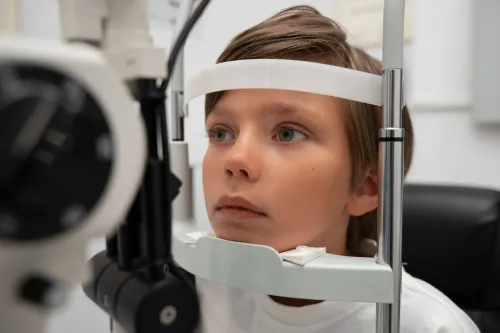
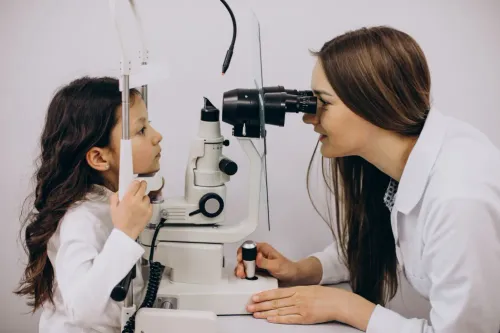
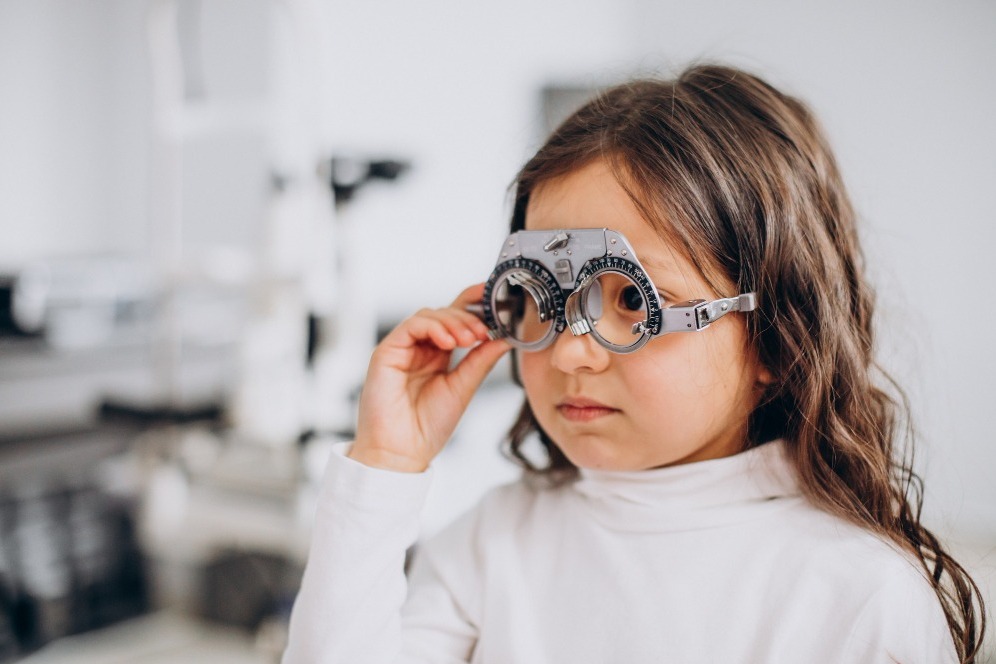
A comprehensive eye examination establishes whether blurred distance vision is actually due to myopia and determines the required prescription. Depending on age and clinical findings, an ophthalmologist may also discuss approaches intended to manage progression.
Parents should understand that obtaining glasses is not necessarily the end of myopia care. Because a child’s prescription can change during growth, periodic monitoring may be recommended.
Families across Chandigarh, Mohali, Panchkula and nearby regions often have children balancing intensive schoolwork, coaching classes and recreational screen use. Paying attention to visual habits is therefore increasingly relevant.
At Eye Care 22, children with suspected short-sightedness can be evaluated for refractive error and overall eye health. Recommendations can then be based on the child’s age, prescription, progression pattern and individual visual needs.
Clear vision supports everyday activities ranging from classroom learning to sports. If a child repeatedly struggles with distance vision, an eye assessment can identify whether myopia or another visual issue is responsible.
Keywords