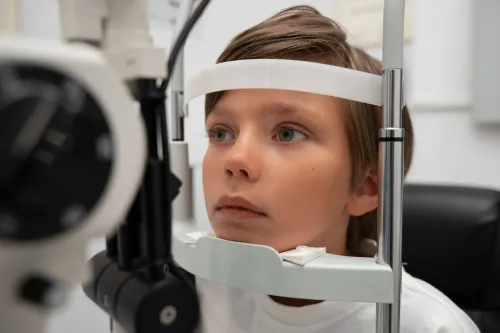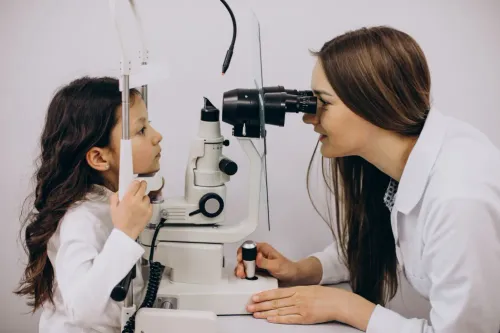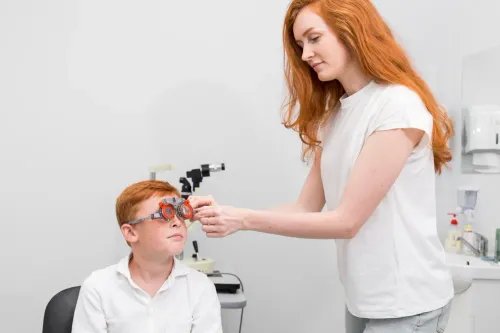
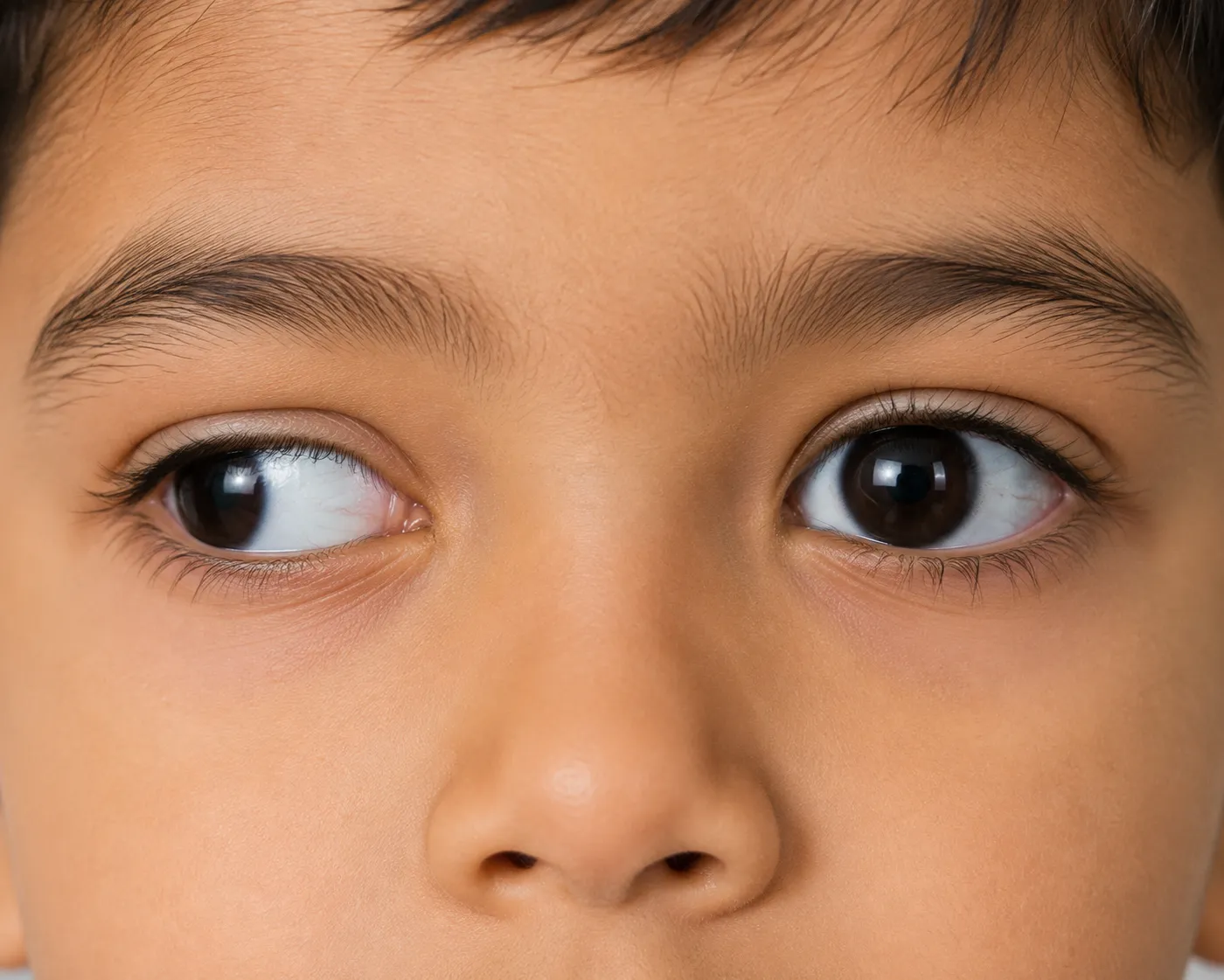
Amblyopia, often called lazy eye, develops when the brain does not learn to use visual information from one or both eyes normally during childhood. The affected eye may even look completely normal from the outside.
Because amblyopia involves visual development, parents searching for “vision therapy” should first understand what is causing the reduced vision and which treatment has evidence for that specific problem.
Why does amblyopia develop?
Common pathways include significant differences in prescription between the two eyes, strabismus or something physically obstructing clear vision during early childhood, such as a cataract or severe eyelid drooping.
The first step is therefore identifying and treating the underlying cause.
A child may need correctly prescribed glasses before additional amblyopia treatment is considered. Depending on the diagnosis and response, treatment may then include patching the stronger eye or using prescribed drops that encourage greater use of the weaker eye.
Where does vision therapy fit?
The term “vision therapy” can describe several different approaches, and they should not all be treated as interchangeable.
Certain orthoptic exercises have established uses for specific binocular or eye-coordination problems. However, broad claims that exercises can treat every type of amblyopia, permanently remove spectacle dependence or correct every childhood learning-related visual complaint should be approached carefully.
For amblyopia, management should be diagnosis-specific and supervised according to the child’s visual acuity, age, refractive error, alignment and response to treatment.
Newer binocular or digital approaches are also being studied and used in selected settings, but they do not remove the need for a complete eye examination and appropriate treatment of the underlying cause.
What should parents ask before starting treatment?
Useful questions include:
- What is causing my child’s amblyopia?
- Does the child need glasses first?
- Is patching or another established treatment appropriate?
- How will improvement be measured?
- How often will vision be reassessed?
- Is the proposed exercise intended for amblyopia or a separate binocular-vision problem?
Clear answers help parents understand the purpose of each part of treatment.
Amblyopia and vision assessment in Chandigarh
Eye Care 22 provides pediatric vision evaluation in Chandigarh for children with amblyopia, squint, refractive errors and related visual-development concerns.
Parents may seek assessment when a child closes one eye, tilts the head, has unequal spectacle prescriptions, develops a squint or fails a vision screening. Amblyopia can also exist without obvious symptoms, making childhood vision screening and eye examinations important.
Modern amblyopia management is not simply about making the eyes “work harder.” It involves identifying why one eye is providing weaker visual input, correcting the underlying optical or structural problem where possible, and helping the developing visual system use that eye more effectively through an appropriate, monitored treatment plan.
Keywords