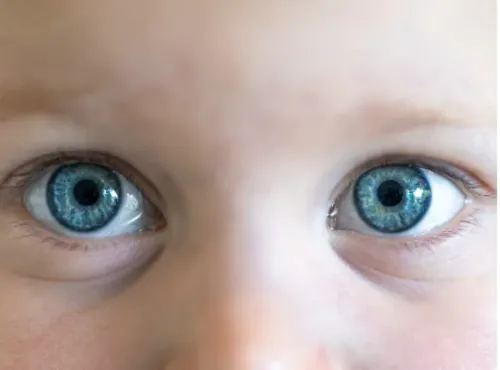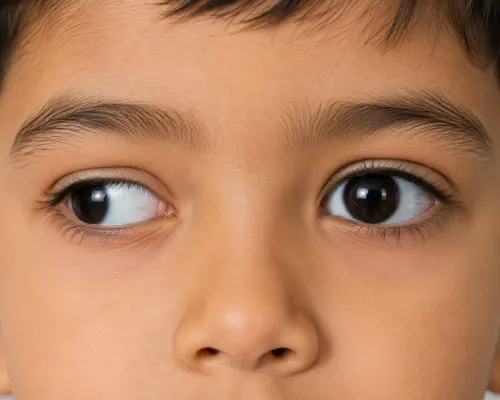
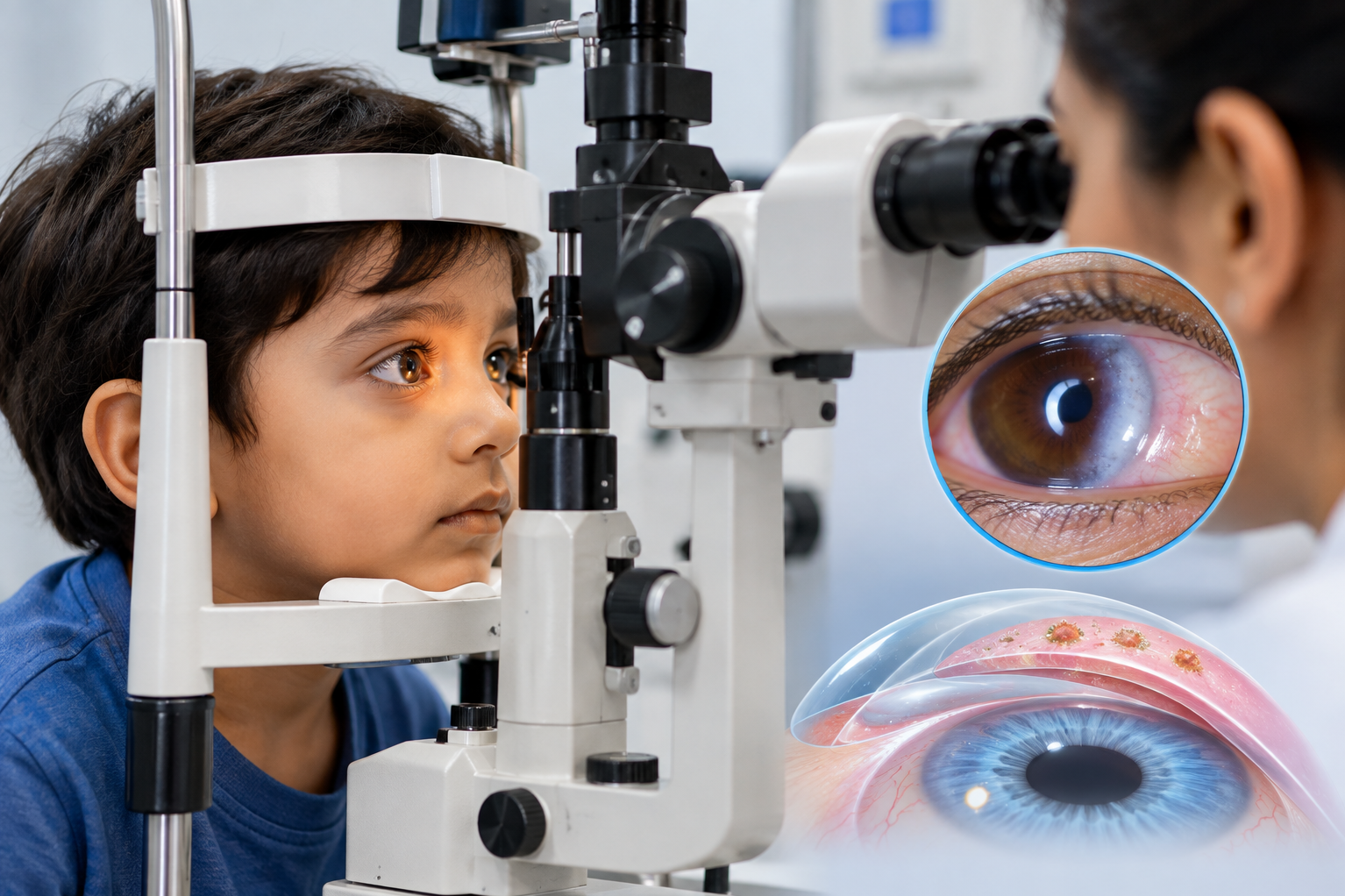
Redness, watering and irritation are common childhood eye complaints, but not every red eye has the same cause. Pediatric cornea and external disease includes conditions affecting the cornea—the clear front surface of the eye—as well as nearby external structures.
Some problems are minor and temporary, while others require timely ophthalmic assessment. Knowing which symptoms deserve attention can help Chandigarh parents make better decisions when a child develops an eye problem.
What Conditions Can Affect the Cornea and Eye Surface?
Children can experience several types of external eye conditions, including infections, allergies, inflammation, injuries and congenital abnormalities.
The cornea is particularly important because it needs to remain transparent and appropriately shaped for clear vision. Significant corneal disease can interfere with the way light enters the eye.
Possible symptoms include:
- Persistent eye redness
- Excessive watering
- Light sensitivity
- Eye pain or discomfort
- Frequent rubbing
- Discharge
- Difficulty keeping an eye open
- A cloudy or unusual-looking area on the cornea
- Reduced or apparently blurred vision
A child may not be able to describe pain or visual changes accurately, so behavior can provide useful clues.
Allergy or Something More?
Eye allergy is common and often causes itching, watering and redness, particularly when both eyes are affected. However, parents should avoid assuming that every red eye is an allergy.
Pain, marked sensitivity to light, reduced vision, an eye injury or a visible corneal spot can indicate a different problem. These findings warrant an eye examination.
Repeated eye rubbing is another concern. While rubbing may temporarily relieve itching, vigorous or chronic rubbing is not a healthy habit and can be particularly relevant in children with certain corneal conditions.
What Happens During an Evaluation?
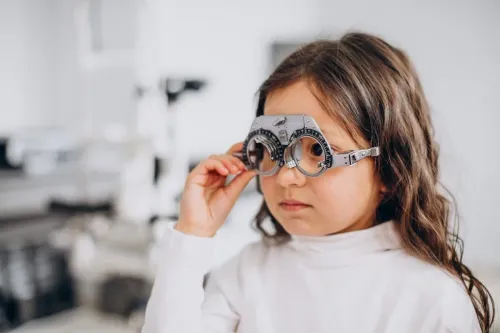
An ophthalmologist examines the front structures of the eye and considers the child’s symptoms, medical history and any history of trauma, allergy or previous eye disease.
Treatment depends entirely on the diagnosis. Different conditions may require lubricating drops, allergy management, antimicrobial treatment, protective measures or more specialized intervention. Eye medicines should therefore not be selected solely on the basis of redness.
Parents should also avoid using leftover prescription drops from an earlier episode or medication prescribed to another family member. Some eye drops are unsuitable for particular conditions and should be used only under appropriate medical guidance.
Families in Chandigarh and the adjoining Tricity region can seek specialized assessment when a child has persistent or unusual eye-surface symptoms. Eye Care 22 evaluates pediatric eye concerns with attention to both the immediate condition and its potential effect on visual development.
Persistent redness, significant pain, light sensitivity, injury or a change in vision deserves more than observation at home. Identifying the actual cause is the first step toward appropriate pediatric corneal and external eye care.
Keywords