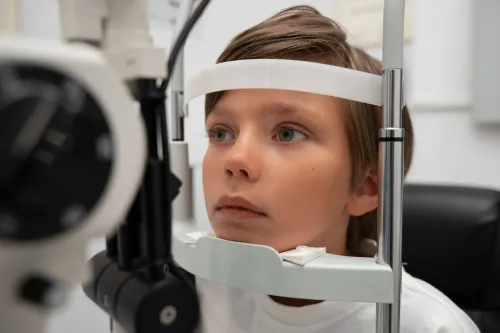

Changes in eyesight become more common with age, but not every change is caused by cataracts. Some people only need an updated spectacle prescription, while others develop clouding of the natural lens that gradually interferes with everyday activities.
Eye Care 22 evaluates cataract symptoms and other causes of declining vision in Chandigarh. A complete examination helps determine whether the problem can be managed with glasses for the time being or whether cataract surgery should be considered.
How Cataract Vision Usually Feels
A cataract develops when the normally clear lens inside the eye becomes cloudy. It generally progresses gradually, although the rate of change differs from person to person.
Common cataract symptoms include:
- Cloudy, hazy or blurred vision
- Glare from headlights and bright sunlight
- Halos around lights
- Difficulty driving after sunset
- Colours appearing dull or faded
- Frequent changes in spectacle power
- Needing brighter light for reading
- Reduced contrast in dim surroundings
- Double images when viewing through one eye
Cataracts commonly affect both eyes, but one eye may become more troublesome earlier than the other.
Could the Problem Simply Be Spectacle Power?
Refractive errors such as short-sightedness, long-sightedness and astigmatism can also cause blurred vision. If the eyesight becomes clear and comfortable with a revised prescription, cataract surgery may not be necessary.
With a significant cataract, changing glasses may offer limited improvement. A person may read the vision chart reasonably well in a clinic yet struggle with glare, low contrast or night driving. This is why decisions should consider real-life visual difficulties rather than spectacle power alone.
Cataract Evaluation in Chandigarh
A cataract assessment may include vision testing, refraction, eye-pressure measurement and examination of the lens and retina. Dilating drops may be used to allow a clearer view inside the eye.
For Chandigarh residents, common readiness indicators for discussing surgery include difficulty:
- Reading newspapers or medicine labels
- Recognising faces from a comfortable distance
- Driving safely, particularly at night
- Using stairs in low light
- Performing detailed professional work
- Managing routine household activities
- Continuing hobbies because of glare or poor contrast
There is no universal stage at which every cataract must be operated on. Surgery is generally considered when reduced vision begins affecting safety, independence or quality of life.
Can Eye Drops Remove a Cataract?
Routine lubricating or medicated drops cannot clear a cataract. Changing glasses and improving lighting may help during the earlier stages, but surgery is the established way to remove a visually significant cataract.
During surgery, the cloudy natural lens is removed and replaced with an artificial intraocular lens. The choice of lens depends on eye measurements, visual priorities, eye health and budget. No lens should be selected solely because it is described as “premium.”
Questions Worth Asking Before Surgery
Before deciding, discuss:
- How much of the vision problem is caused by the cataract?
- Are there corneal, retinal or optic nerve conditions that may limit improvement?
- Which lens options are appropriate for the eye?
- Will spectacles still be needed afterward?
- What precautions and follow-up visits are required?
- When can normal work, travel and exercise resume?
- What symptoms after surgery require immediate attention?
Existing glaucoma, diabetic retinopathy, corneal disease or macular problems can influence the expected visual outcome. These conditions do not always prevent surgery, but they should be identified and discussed beforehand.
A cataract should be managed according to its effect on the individual—not simply age or the appearance of the lens. If cloudy vision or glare is disrupting your routine, schedule a cataract assessment with Eye Care 22 in Chandigarh.
Keywords