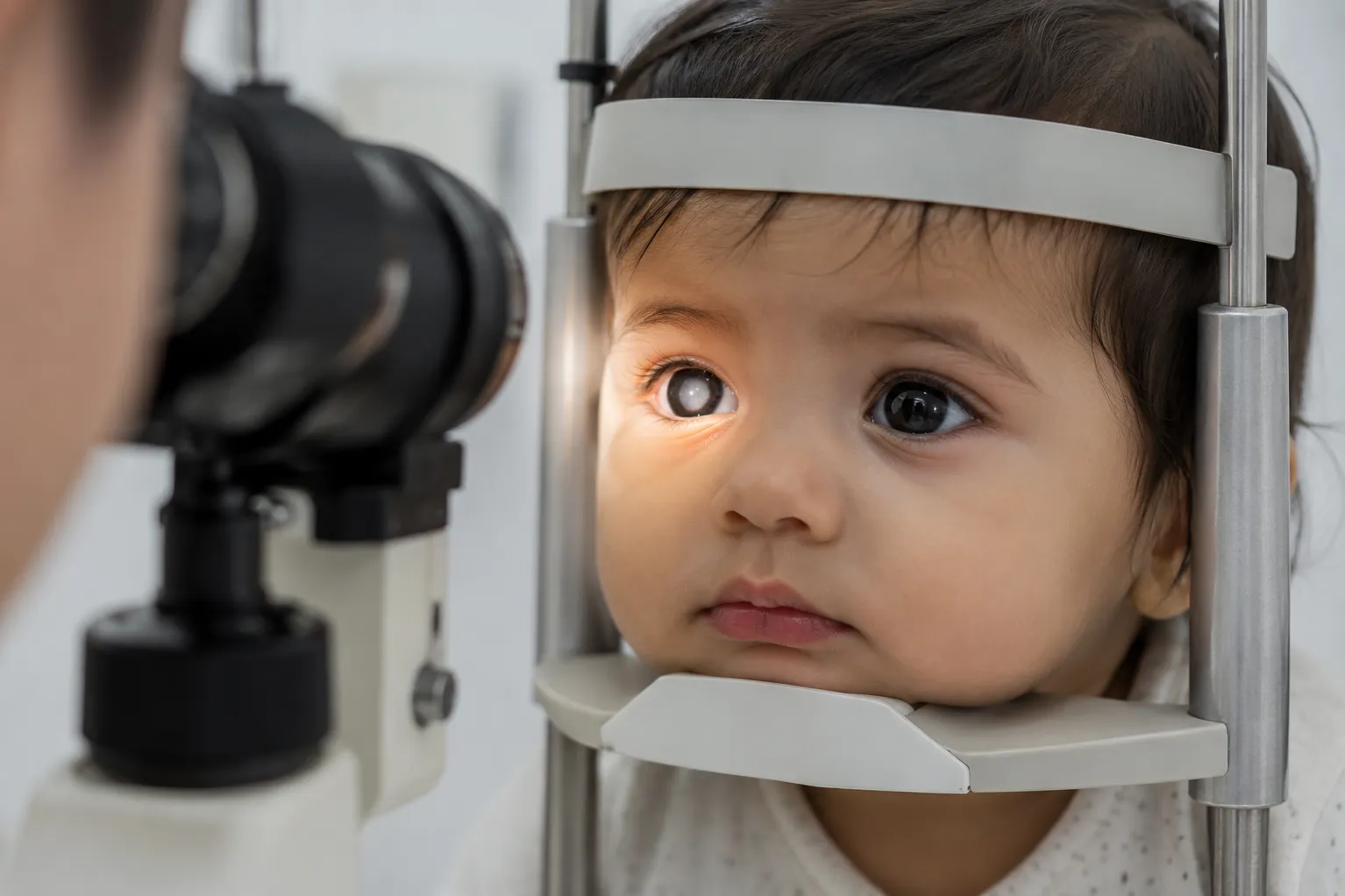
Cataracts are often thought of as an age-related problem, but babies and children can develop cataracts too. A pediatric cataract occurs when the normally clear lens inside the eye becomes cloudy.
In a young child, the concern extends beyond blurred vision. Because the visual system is still developing, a significant cataract can interfere with the clear visual input the brain needs during childhood.
How can parents recognise a childhood cataract?
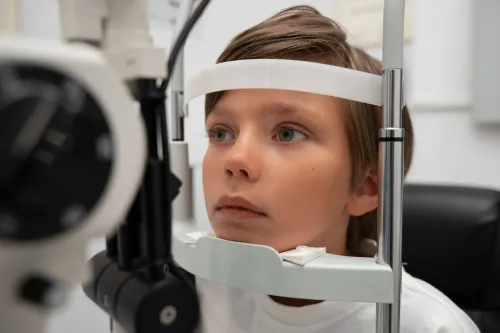
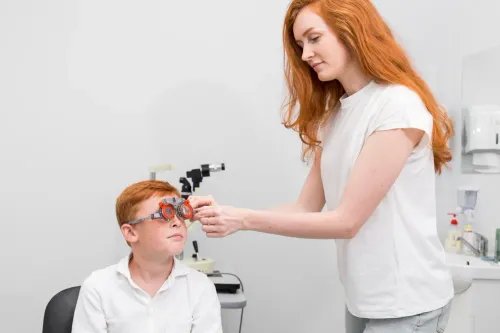
Some pediatric cataracts are discovered during newborn or routine eye examinations rather than through symptoms noticed at home.
Possible signs include:
- A white or grey appearance within the pupil
- Poor visual attention
- Difficulty following faces or objects
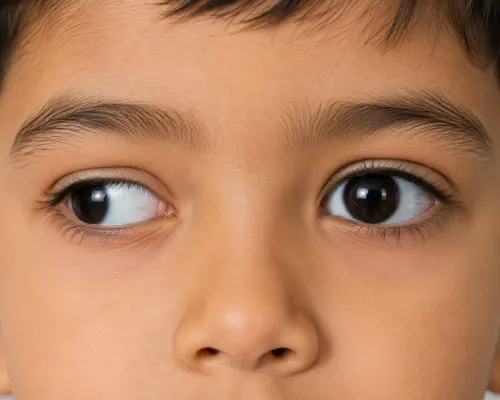
- Squint or eye misalignment
- Unusual eye movements
- Reduced vision in an older child
A white pupil has several possible causes, including conditions other than cataract, and should receive prompt ophthalmic evaluation.
Does every pediatric cataract need surgery?
No. The size, position and density of the cataract matter, as does its effect on vision.
A small cataract outside the central visual axis may sometimes be monitored. A visually significant cataract that prevents clear images from reaching the retina may require surgical management.
The decision is individualised after a pediatric ophthalmic assessment.
Care does not necessarily finish after cataract surgery
This is an important difference between pediatric and routine age-related cataract care.
After treatment of a significant childhood cataract, the developing visual system may still require ongoing management. Depending on the individual case, care can involve optical correction with glasses or contact lenses and treatment for amblyopia.
Regular follow-up allows the ophthalmologist to monitor vision, refractive changes and other potential postoperative concerns.
Choosing pediatric cataract care in Chandigarh
Parents searching for pediatric cataract treatment in Chandigarh should consider whether the care pathway includes diagnosis, surgical decision-making when required and continued management of visual development.
Eye Care 22 evaluates childhood eye conditions in Chandigarh and can assess children with suspected lens opacity or related visual concerns.
Parents should not wait for a young child to describe blurred vision. A white pupillary appearance, new squint, poor visual tracking or unexplained reduction in vision deserves an eye examination.
Pediatric cataract treatment is highly individual. The central objective is to identify whether the cataract is visually significant and then create an appropriate plan for the child’s eye health and developing vision.
Keywords