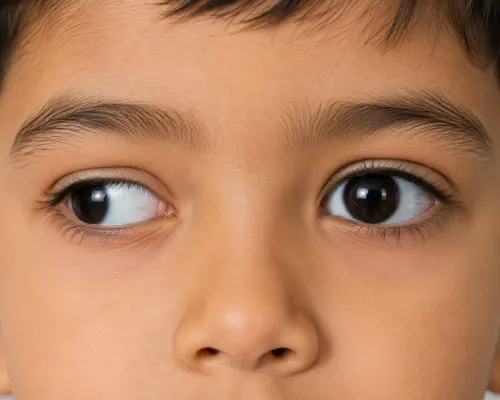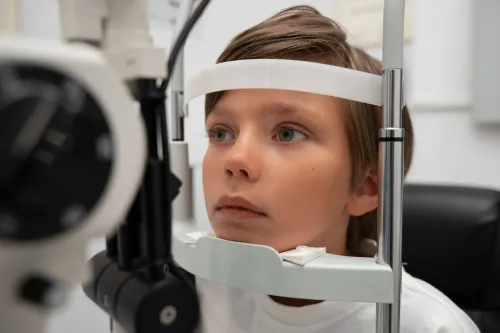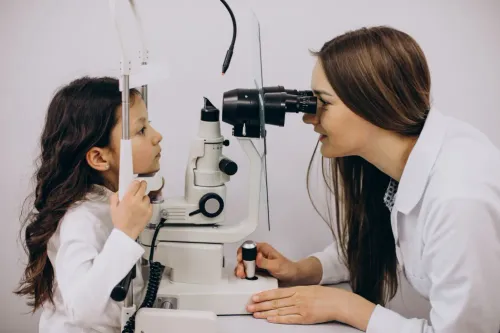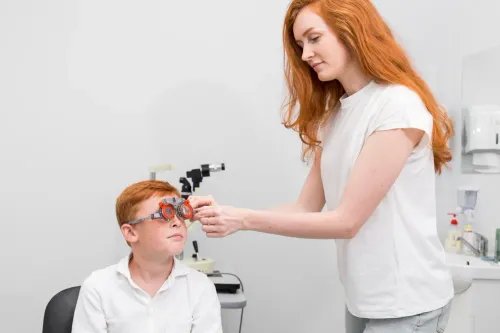
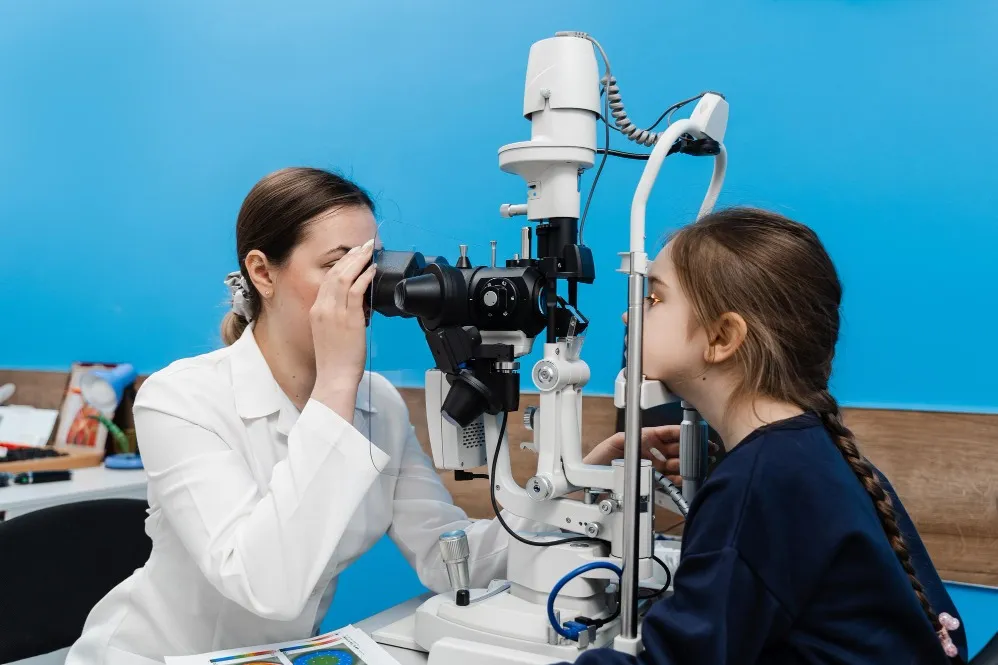
Redness, watering and eye irritation are common childhood complaints, but persistent symptoms can occasionally involve the cornea or other structures on the surface of the eye. Because the cornea plays an important role in focusing light, conditions affecting its clarity or shape deserve careful evaluation.
Pediatric corneal problems can differ considerably from routine temporary irritation. Understanding the warning signs helps parents know when a child needs a more detailed eye examination.
What are pediatric corneal and external eye diseases?
The cornea is the transparent front surface of the eye. The external eye also includes structures such as the conjunctiva, eyelids and tear-film system.
Children can develop conditions involving infection, inflammation, allergy, injury, dryness, corneal scarring or developmental abnormalities. Some problems are mild, while others can interfere with vision.
Parents should pay attention to persistent:
- Eye redness
- Excessive watering
- Sensitivity to light
- Eye pain or discomfort
- Frequent rubbing
- Difficulty opening an eye
- Reduced or blurred vision
- An unusual cloudy area on the cornea
A child with significant pain, sudden visual change, trauma or a visibly cloudy eye requires timely medical assessment.
Why children require a careful approach
Young children may struggle to describe whether they have blurred vision, burning, pain or light sensitivity. Their behaviour therefore becomes an important clue.
A child might avoid bright rooms, keep one eye closed or become unusually reluctant to read or look at screens.
Another consideration is visual development. Significant corneal opacity or irregularity can prevent a clear image from reaching the developing visual system, so assessment should consider both the eye disease and its potential effect on vision.
Evaluation depends on the underlying problem
Pediatric corneal care is not based on one standard treatment.
An ophthalmic assessment may consider the appearance and clarity of the cornea, refractive error, visual acuity, eyelids and ocular surface. Additional tests may be selected according to the suspected condition and the child’s age.
Treatment can vary considerably, from medicines and protective measures to correction of associated refractive errors or surgical care for selected conditions.
Parents should avoid using leftover antibiotic, steroid or other medicated eye drops without medical guidance, as different eye conditions can produce similar-looking symptoms.
Pediatric corneal care in Chandigarh
Eye Care 22 offers pediatric eye assessment in Chandigarh for children experiencing corneal and external-eye concerns.
For families across Chandigarh and nearby regions, persistent redness, pain, light sensitivity, corneal cloudiness or unexplained visual difficulty should not simply be treated as routine eye irritation.
An examination can identify the structure involved, establish the likely cause and guide treatment according to the child’s clinical findings.
Keywords