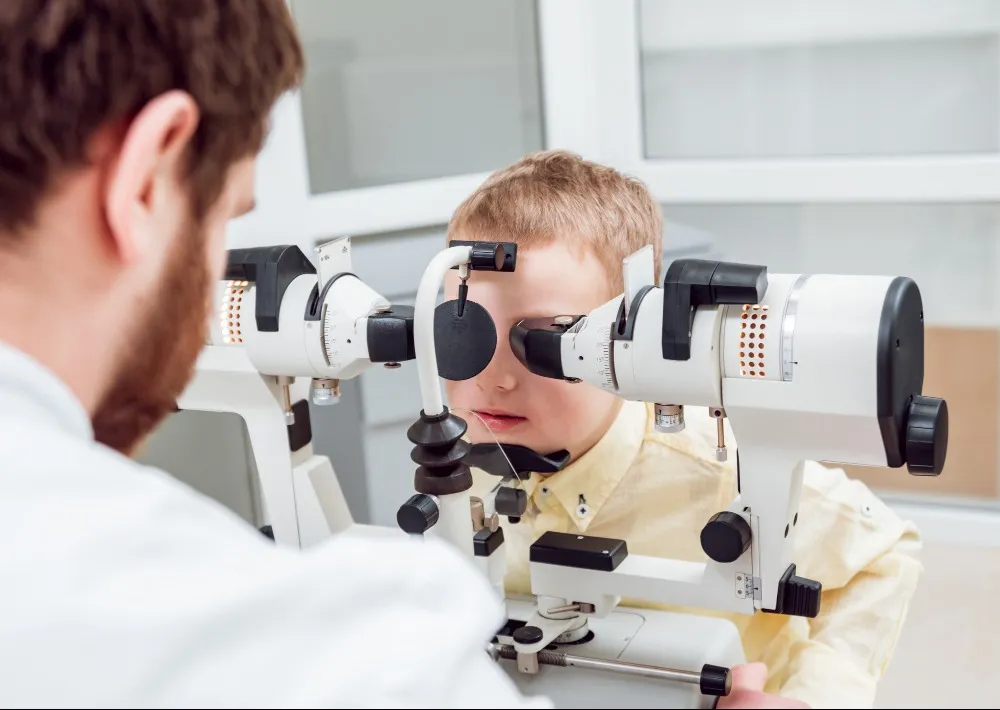
Seeing involves much more than the eyes. Visual information travels from the retina through the optic nerves and complex neurological pathways before the brain interprets what a child sees.
Pediatric neuro-ophthalmology focuses on visual problems involving these connections between the eyes and nervous system.
Which symptoms may lead to neuro-ophthalmic evaluation?
Children may be referred for assessment because of findings involving the optic nerve, pupils, eye movements or unexplained visual loss.
Depending on the underlying condition, parents may notice:
- New or unusual eye movements
- Double vision in a child old enough to describe it
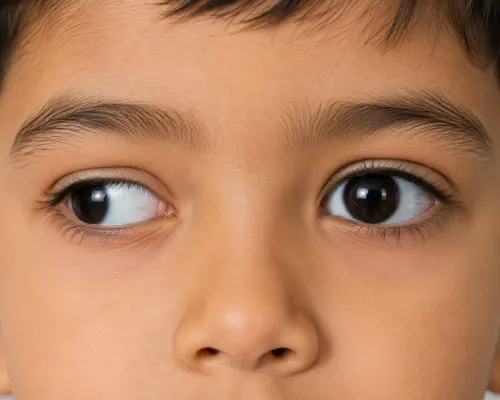
- Difficulty moving one or both eyes normally
- Changes in pupil appearance
- Unexplained decline in vision
- Abnormal head posture
- Visual complaints associated with neurological symptoms
These symptoms do not automatically indicate a neurological disease. Many have other explanations, which is precisely why careful assessment is needed.
How does assessment differ from a routine eye check?
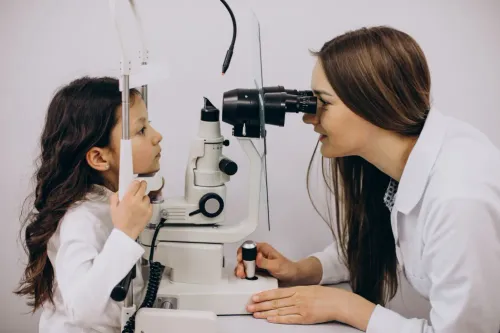
A neuro-ophthalmic evaluation pays particular attention to how the eyes and neurological visual pathways function together.
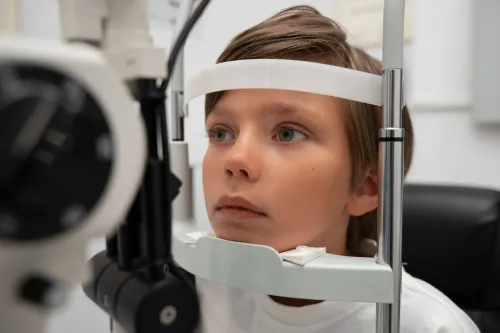
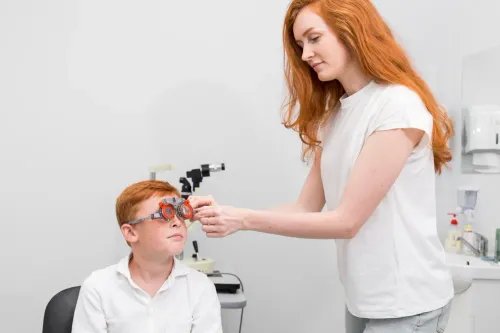
The examination may include visual acuity, pupil reactions, colour vision when age appropriate, eye movements, alignment, optic-nerve appearance and visual fields when the child can reliably participate.
Depending on findings, additional investigations such as imaging, blood tests or neurological assessment may be required.
Children present a particular challenge because they may not have the vocabulary to explain subtle visual symptoms. Clinicians therefore combine examination findings with observations from parents and the child’s medical history.
Why coordinated care can matter
Some neuro-ophthalmic problems exist alongside neurological, developmental or systemic conditions. In these situations, coordination between ophthalmology, pediatrics, neurology and other specialties may be appropriate.
The purpose is to understand whether the visual symptom originates primarily from the eye, optic nerve, eye-movement system or another part of the visual pathway.
Pediatric neuro-ophthalmology in Chandigarh
Eye Care 22 provides pediatric ophthalmic evaluation in Chandigarh for children with complex visual concerns, including problems that may involve the optic nerves or eye-movement pathways.
Parents seeking pediatric neuro-ophthalmology assessment should bring relevant previous eye reports, neurological records, imaging or other medical documents when available. These can help establish how symptoms have developed over time.
New visual loss, sudden double vision, abrupt eye-movement abnormalities or visual symptoms accompanied by significant neurological changes require timely medical assessment.
A structured evaluation can help identify the likely source of the problem and determine what further investigation, treatment or multidisciplinary care is appropriate.
Keywords