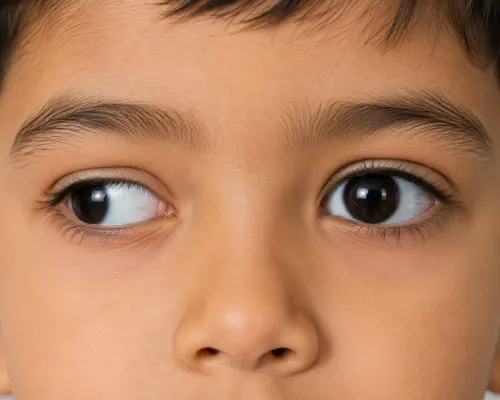
A child’s eyes do not always appear perfectly coordinated during the earliest months of life. However, when one eye repeatedly turns inward, outward, upward, or downward, the condition may be squint or strabismus. Persistent eye misalignment deserves proper assessment because childhood is an important period for visual development.
For families in Chandigarh and surrounding areas of Punjab and Haryana, recognising the difference between an occasional unusual eye position and persistent squint can help parents seek an eye assessment at the appropriate time.
What happens when a child has squint?
Normally, both eyes work together and send coordinated visual information to the brain. With strabismus, the eyes may not consistently point toward the same object.
The deviation may be noticeable throughout the day or only under certain circumstances, such as when the child is tired or concentrating.
Parents may notice:
- One eye turning inward or outward
- Closing one eye in bright sunlight
- Tilting or turning the head while looking at objects
- Difficulty judging distances
- Eyes that do not appear to move together
- Frequent squinting or visual discomfort
Eye alignment problems can sometimes be associated with refractive errors or amblyopia, commonly called lazy eye.
Why does early assessment matter?
Vision develops significantly during childhood. If the brain receives a consistently clearer image from one eye than the other, it may begin relying more heavily on the stronger eye.
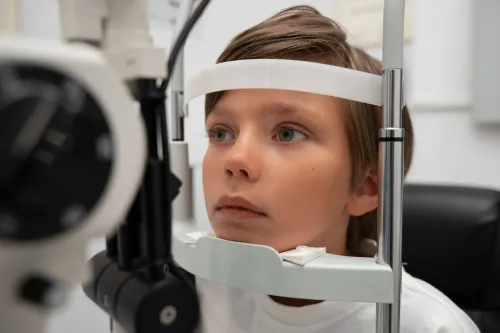
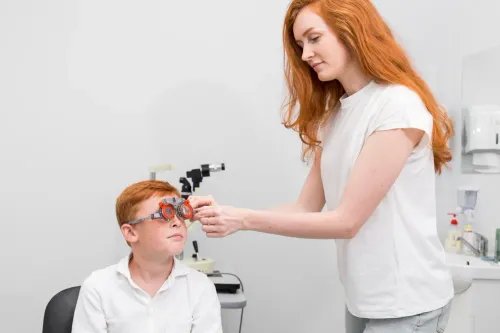
For this reason, a squint assessment involves more than looking at the cosmetic position of the eyes. A pediatric eye evaluation may examine visual acuity, refractive error, eye movements, alignment and the health of the eye itself.
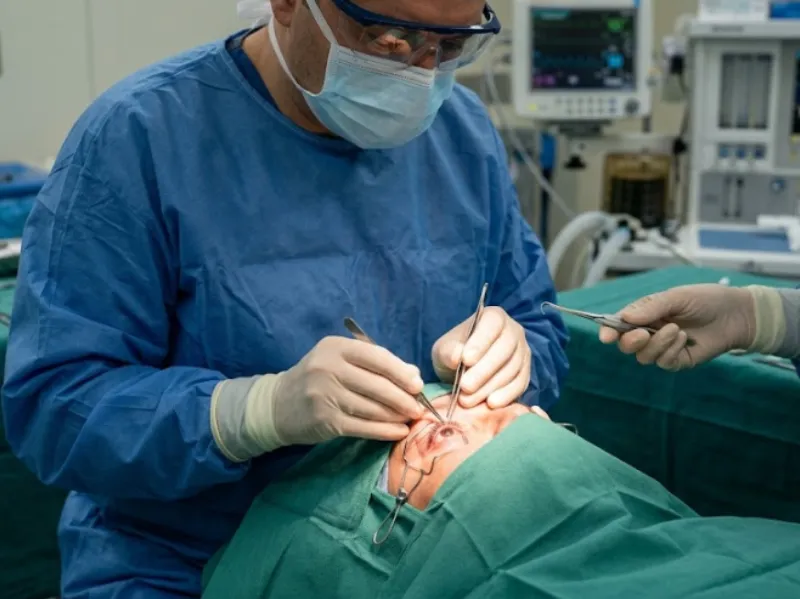
Treatment depends on the cause and individual findings. Options may include prescription glasses, amblyopia management, selected eye exercises, prisms or eye-muscle surgery.
Does every squint require surgery?
No. The appropriate approach depends on the type and cause of strabismus.
Some children have eye misalignment associated with focusing problems and may benefit from corrective glasses. Others may require treatment for amblyopia. Surgery may be considered when eye-muscle alignment needs to be corrected.
Parents should therefore avoid assuming that every visible squint will require an operation or that a child will simply outgrow persistent misalignment.
Pediatric squint assessment in Chandigarh
Eye Care 22 provides pediatric eye evaluation in Chandigarh for children with concerns involving eye alignment and visual development. Assessment helps establish what type of squint is present and whether another vision problem needs attention.
Parents who repeatedly notice an eye turning, unusual head positioning, closing of one eye, or other changes in their child’s visual behaviour can arrange a pediatric ophthalmic evaluation. Timely assessment provides the information needed to plan appropriate care around the child’s individual visual needs.
Keywords